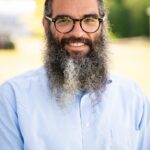

In honor of the 77th yahrtzeit of Rav Shraga Feivel Mendlowitz zt”l
Reb Shraga Feivel was sitting outdoors with a group of yungeleit, and asked one to turn over a large stone embedded in the ground. As he did, swarms of insects scurried about in every direction.
Said Reb Shraga Feivel: “Do you see those creatures? For their entire existence under that rock, they believed the world to be a dark, dreary place. By overturning that stone, you have revealed a whole new world, filled with light and beauty. In exposing them to the sun and sky, you’ve introduced a new dimension of reality into their lives.
“That is our mission in this world,” he continued. “To roll the heavy stones off souls and reveal the Yiddishe neshamah, to allow the ohr haShechinah to shine. Once we have moved the boulders, we can lift our eyes to the Heavens, behold our Creator, and know our Yiddishkeit.”
Reb Shraga Feivel defied definition and categorization; not tethered to any specific one of the “shivim panim laTorah,” he embodied the infinite expansiveness of Yiddishkeit. Reb Shraga Feivel’s way of learning Torah revealed its awesome unity: plumbing the commentary of Rav Shimshon Raphael Hirsch to explain challenging passages in Tanya — and vice versa. Chassidus, mussar, nigleh and nistar — for Reb Shraga Feivel, it was all One.
Even while quoting freely from the writings of Rav Avraham Yitzchak HaKohein Kook, Rav Shraga Feivel maintained a close friendship with and had the deepest respect for Reb Yoelish, the Satmar Rebbe. At Torah Vodaath and Beis Medrash Elyon, classic yeshivah learning was complemented with shiurim on Tanach and tefillah, the teachings of Reb Tzaddok HaKohein of Lublin with insights on the intricacies of Biblical grammar. Rambam’s Shemonah Perakim and Rebbe Nachman’s Sippurei Maasios, Chovos Halevavos, Ramchal and the Tzemach Tzedek.
Fusion implies the bringing together of separate, individual parts to form a complete whole. Reb Shraga Feivel didn’t “fuse” discrete parts; he was drawing from a higher source.
“The Tree of Life was in the center of the Garden” (Bereishis 2:9). Reb Shraga Feivel taught: No matter how disparate the various ideas and approaches in Torah that we learn may seem to be, they are all different approaches to the Eitz Chayim. As long as the Tree of Life is “b’soch ha’gan” — and Torah is at the center — it can be approached from all directions.
Reb Shraga Feivel carried the dialectic within himself: charisma and humility, passionate activism and hisbonenus, intellect and emotion. A gadol who saw himself as a regular person, “Mr. Mendlowitz” shunned all honorifics and trappings of kavod. A public figure, constantly surrounded by talmidim, who relished privacy and quiet. An idealist with two feet firmly on the ground, Reb Shraga Feivel upheld unwavering fidelity to his Hungarian upbringing, while attuning his incredible sensitivity to the needs and realities of the postwar American Jewish community.
Uncompromising in his dedication to truth — at a time when ideology mattered — Reb Shraga Feivel was unabashed in voicing staunch opposition to innovations he felt threatened tradition, but still managed to maintain respectful working relationships with those he vehemently disagreed with.
“Hashem sefasai tiftach” — in asking the Ribbono Shel Olam to open our mouths and sing His praise, we aim to emulate His infinite nature, to be big, expand our boundaries, open our borders. As Reb Shraga Feivel would say: “Der seichel iz elastish” — the mind is elastic. If we are intellectually honest, it can be stretched from one extreme to another. Hotziah mimasger nafshi, Release my soul from its constraints.
Reb Shraga Feivel’s natural expansiveness validated drawing from approaches in Yiddishkeit that seemed to conflict: “Some souls drink from Tanya. Others from the Ramchal. Still others from Rav Hirsch. I drink from all of them, though at any given time, I might drink from one in particular.” From Reb Shraga Feivel came “insider” confirmation that the search for truth and the fulfillment of ratzon Hashem is more about “a Torah perspective,” as opposed to “the Torah perspective.” “Taamu u’reu ki tov Hashem,” for a searching Jew, Reb Shraga Feivel catered a fresh, bountiful, and spiritually healthy smorgasbord of theological opportunity.
Reb Shraga Feivel’s open heart felt the joys and pain of Klal Yisrael, burned for Torah, and was deeply connected to Eretz Yisrael — in love with everything holy. Sensing the Divine vitality that pulsates through all of creation, he was a baal avodah who heard all of nature singing Hashem’s praise. Reb Shraga Feivel enjoyed spending time in nature, and often looked toward the sky, davening from what he called “the siddur of David Hamelech.” When a talmid inquired of his rebbi’s preference of davening next to a window: “He thinks I’m looking out, but actually, I’m looking in.”
Reb Shraga Feivel’s singular focus on “looking in” — on living a life of penimius, nurturing the inner worlds of others, and encouraging in-depth limud HaTorah — inoculated against superficiality. Every Jew can be an “insider.” With Torah at the center, we are all equally close.
Reb Shraga Feivel suffered a heart attack when he heard that the Old City had fallen into Jordanian hands during Israel’s War for Independence. Doctors warned him against learning Baal Shem Tov al HaTorah — Reb Shraga Feivel’s excitement when learning the heiliger Baal Shem made his sensitive Jewish heart race dangerously.
“V’hasirosi lev ha’even v’nasati lachem lev basar.” In the end of days the Navi Yechezkel promises that Hashem will remove our hearts of stone and restore our natural hearts of flesh — a fleishigeh heart that senses that every moment in this world is revelation of Hashgachah Pratis and an opportunity to draw close to Hashem. Or as Reb Shraga Feivel would say, “Der grester glick fun leben iz leben alein — the greatest fortune in life is life itself.”
Working in the Jewish community, I am privileged to see the absolute best of Klal Yisrael. But even when everyone has only the best of intentions, things can often get personal, and worthy mosdos of different stripes step on each other’s toes. Dedicated professionals and volunteers, even rebbeim and menahalim, passionate for their specific cause, can get territorial over donors, programs — even social services. It’s hard not to get caught up in all of it. Business is business, people are people.
Asking myself, “What would Reb Shraga Feivel do?” invariably leads to clarity and magnanimity, ayin tovah and expansiveness. Reb Shraga Feivel was never confined or defined by where he worked — even by the yeshivos he founded, nurtured, and led. When the fledgling Yeshivas Rabbeinu Chaim Berlin was struggling with recruitment, Reb Shraga Feivel transferred some of his most prized talmidim there, sending his best off to join “the competition.”
It wasn’t that Reb Shraga Feivel was so confident in his yeshivah that he was unafraid of competition; he simply saw that in the world of truth and penimius, there is no competition. Ovdei Hashem are all working for the same Boss, at different points in the Garden, facing the same Center. Reb Shraga Feivel would remind his talmidim — in and out of yeshivah — that regardless of our professional identity, we are all “sheluchei d’Rachmana,” messengers on a mission from G-d.
Tzaddikim b’mitasam nikra’im chayim — Reb Shraga Feivel zy”a, chai v’kayam!
This article was found in Nekuda Tova Issue 50.