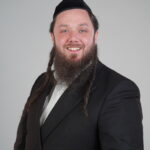

I connect very deeply through music. So for me, part of the way I hold onto the experience of being by the Rebbe is by singing the niggunim I heard him sing. So by Shalosh Suedos, I would sing his tunes for the zemiros, and that helped me to be mekasher to the Tzadik from far away. On Friday night I would sing his “Shalom Aleichem,” and use his ‘teniya’ niggun (“aha-ah-ah-ah-ah-ah-ah”).
One day it hit me — wouldn’t it be geshmak to make a music album of the niggunim I heard at Toras Chochom (that’s the name of Rav Itcha Meir’s shul/Beis Medrash)? The project was a very meticulous avodah. We would sit in the studio, and sometimes we had the Rebbe’s gabbai on the phone, asking him to guide us on little nuances of a niggun: how does the Rebbe sing this part or that part.
Thank You Hashem that we are zocheh to be mekasher to the heiligeh tzadikim!
For example, in the song “B’nei Heichala,” the words go B’nei heichala, dichisifin, l’mechezai ziv, and the next words I pronounced “d’zoo-eir anpin.” Many people would pronounce that “d’zer anpin.” So you might think I’m just pronouncing it a bit off — but that’s because the Rebbe specifically and intentionally pronounces it that way (based on Kabbalah and Chassidus). There are many examples of this in the creation of the album. The avodah of being mekasher means getting these nuances right!
I called the album “Hiskashrus” because that is exactly what it is! Give it a listen, and bring yourself to another world, to the world of our heiligeh tzadikim.
The “Hiskashrus” Album can be streamed wherever you get your Jewish music.
This article was found in Nekuda Tova Issue 67.