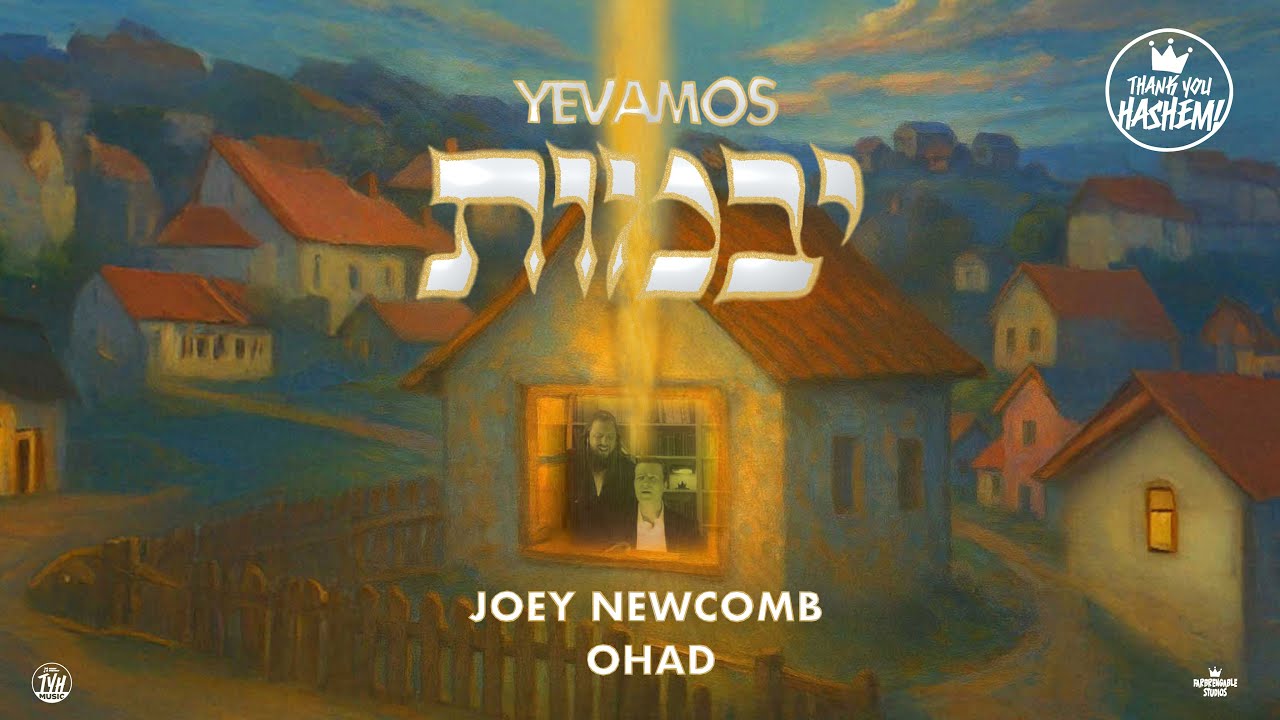
This song draws a profound message from the writings of the Komarna Rebbe, Rabbi Eliezer Zev Rosenbaum (d. 1898), who chronicled a pivotal, deeply personal moment of Divine revelation. His experience, captured in the lyrics, serves not only as a historical anecdote but as a timeless blueprint for navigating life’s inevitable crossroads.
The Komarna Rebbe, known for his deep piety and scholarship, relates how he found himself at a significant juncture, burdened by major decisions concerning the direction of his life’s path. This feeling of being at a “crossroads” is a universally relatable human experience. We all face moments where the way forward is obscured by doubt, uncertainty, and competing priorities. In such times, we yearn for guidance, but often we fall back on mere human intellect, which, while valuable, can only process limited information.
The Rebbe’s response to this confusion was not to retreat into anxious contemplation or worldly consultation. Instead, he immersed himself in the deep waters of Torah study, specifically the tractate Gemara Yevamos.
Crucially, the text emphasizes the nature of this learning. It was not undertaken as a dry, intellectual exercise aimed at merely mastering complex legal arguments. Rather, it was described as a “deep act of connection to Hashem”. This distinction is the core of the song’s message. Torah study is a channel, a means of attaching oneself to the Divine Source of all wisdom. It transforms the act of learning from an academic pursuit into a spiritual meditation.
By focusing his entire being on the holy words in front of him, the Rebbe created an inner vessel capable of receiving spiritual light. He transcended the purely cognitive and entered a state of deveikus (cleaving to G-d), something that our tzadikim teach is accessible to each person on their own level.
The result of this intensified connection was a sudden, dramatic, and unmistakable Divine intervention: “ואב הרחמן ריחם עלי ופתאום באמת לימוד גמרא יבמות נפל עלי אור עליון ונתמלא כל הבית אורה” (“And the Father of Compassion had mercy on me, and suddenly, in the middle of learning Gemara Yevamos, a Heavenly light descended upon
me, and the entire house filled
with light”).
The event was so profound that the Rebbe stated he “tangibly experienced the light of The World To Come.” This was not a subtle shift in mood or a philosophical insight; it was a spiritual illumination that shattered the confusion.
This descent of Ohr Elyon (Supernal Light) represents the ultimate resolution. But the especially prudent message that this song is driving home, and the reason for taking this story and translating it into song, is because this is something we can and should all keep in mind when approaching our own personal Torah learning. We are taught to emulate the ways of the Tzadik, and therefore, when we approach our learning, we should always hold this in mind, striving and seeking the deveikus that is accessible to all of us within our Torah.